Monday, November 8, 2010

Urban Renovation


            While researching the problem of urban blight, I have come across a few solutions that help the community rather than improve the economic conditions of the area. One example of urban renovation that stuck out was different developers entered a poor Los Angeles neighborhood and renovated a modernist apartment tower instead of demolishing and starting from scratch. They renovated the apartment floor by floor, thus improving upon the existing structure and keeping the affordability of the rooms low for the local citizens. This style of renovation instead of building completely new structures is constructive towards urban blight because it increases the appeal of a community while being able to keep the local culture intact. The appeal generated by these renovated apartment complexes might draw in more upper class citizens, increasing the diversity of areas. This systematic development of areas will enable developers to create expensive complexes over time, but a renovation system such as this needs to first be established to create the path for an improved neighborhood. 

Sunday, October 31, 2010

USC Hospitality


               USC’s University Park Master Plan is giving back to the community in many different ways. USC has made it their goal to improve university life, which includes both on and off campus settings. They have created many ways to produce jobs and security for everyone involved at USC. Their main goal in this master plan is to intertwine the on campus culture with the surrounding area, and create a safer environment to harvest this relationship. I like that USC is trying to expand the available on-campus housing by creating over 7,000 more beds to accommodate additional students and faculty. By doing this USC is creating more local jobs for workers assigned to build these structures and maintenance while increasing the number of students working for their graduate degree. This vow to improve local surroundings for USC students and citizens of south Los Angeles has given USC an honorable name around the community.

Sunday, October 24, 2010

Across The Border

            ASonia Nazario's presentation, I learned about the adventure some are taking to make it to America to find their families. Some countries still see this as a land of opportunity, and people continue come here to provide better conditions for their family. The desire for a better life sometimes splits families apart, and this causes rifts that are heartbreaking. Nazario described the campaigns young kids have been attempting to find their parents, and how their determination can sometimes overpower the lack of sufficient supplies for such a journey. It was so interesting to hear about dangerous encounters on the train tops and about all the different people with a similar goal of making it to America. It gave me a new perspective of the unfortunate lives people are born into and how this country is a symbol of promise and success and people will do almost anything to be a part of it. As I reflect on the reasons for illegal immigration into the country, I realize that people shouldn’t be so quick to judge the illegal immigrants living in the United States.

Sunday, October 17, 2010

The Real Honest Abe


Throughout the process of researching Abraham Lincoln’s motives for issuing the Emancipation Proclamation of 1863, my perception of his character has dramatically changed. He is world renown of being the Great Emancipator and Honest Abe, but his morals and character weren’t as pure as people thought. During my research I discovered that Abe didn’t release the slaves from the hell of slavery for moral reasons, but only to save the Union from decimation. Not only this, Lincoln explicitly said that blacks would never amount to what white people were and supported the mass migration of black back to Africa.

            This new founded information changed my perception of Abraham Lincoln. In grade school, it was explicitly taught that Abraham Lincoln was a superbly just and moral President in America’s rich history. A majority of the information that I’ve researched claims that Abraham Lincoln was only interested in leveling the playing field between the North and South on an economic level, not in the civil rights of blacks. There are so many monuments and sculptures across the country dedicated to Abraham Lincoln that exemplifies his integrity and honesty. Although he was honest when giving his opinion on the status of blacks in America, his integrity has been misinterpreted by a majority of the general public by placing him in a brighter light than he deserves. When studied in depth, the reasons that Abraham Lincoln had for the freedom of slaves are perfectly understandable. He was desperate to turn the tide of the war and freeing the slaves was the only weapon he had at his disposal. It was essential for the Union to stifle the Confederates’ economy and destroying their cotton market to diminish the amount of capital available to be spent on ammunition and freeing the slaves accomplished this. Without Lincoln’s boldness to oppose white societies customs in a time of great controversy, the country may have taken a different course. The real reason the 13th Amendment was issued should be taught in schools to diminish Lincoln’s historical contribution to African American’s advance in America’s society and amplify their success as a result of the struggle and determination of African Americans during the years after the Emancipation Proclamation

Thursday, October 7, 2010

The Real Abraham Lincoln


              The topic I am choosing for this re-evaluation is Abraham Lincoln, with a specific focus on him issuing the Emancipation Proclamation on January 1st, 1863. This subject has been taught in schools different ways, most grade schools teach one side of the story while high schools and colleges teach the other.  The grade school method takes away an essential part of the truth and reasoning why the Emancipation Proclamation was even created. They make it seem like the most dominating reason why it was issued was because people began to realize that slavery was morally wrong, which is only partly true. I can understand why grade schools would want to teach positive morals to their pupils, but a teacher can never teach positive morals through lying. It is possible that grade schools believe that the hard truth would discourage kids and make them feel less equal to others in their class, but the entire issue of slavery deals with inequality so at some point they are going to learn the truth about the past.

            The way that high schools and colleges teach the reason for the creation of the Emancipation Proclamation is the way it should be taught universally. It is taught that Abraham Lincoln freed the slaves as a strategic move by the Union to influence the slaves to flee the South. This would have completely stopped the production of cotton if all the slaves left which would crush the South’s economy, but it didn’t quite work out that way. Instead, the slaves that left gave the Union the extra little push it needed to oust the Confederates and place America in its rightful state. Therefore, it should be taught that the Emancipation Proclamation was created to be a desperate move to save the Union. Abraham Lincoln didn’t hate slavery, he just didn’t want it moving West as people began to settle in California, which was the underlying cause for the Civil War. He thought that if there was no slavery, then there would be no reason to fight a war. Of course, if the Confederates won slavery would have taken over all of America, but the Union prevailed and Abraham Lincoln is still viewed as a savior and a militant genius. 

Sunday, September 26, 2010

Social Networking Activism Perfection


            For movements to make better use of social network activism, they need to make significant changes. Most importantly, they need to link the gap between the Internet social network and the personal social network. These two coexist right now and for social movements to be most effective these have to cooperate. Movements are based on personal social relations to progress their cause, and outreaching through social networking could do wonders for organizations. An organization that creates an interactive and interesting website will draw in an audience. People’s interest and curiosity and will entice them to read about the organizations’ causes and potentially donate money towards them or become a member. The two aspects of social movements need to combine for organizations to successfully recruit members online and solidify relations as well as exchange ideas on the movement’s progression in meetings in members’ local areas.
            To accomplish the complete blend of present day social activism recruitment and support, organizations need to have foundations in local areas as well as an online presence. In the modern world advertisements are everywhere, and these visual displays constantly draw people into their products or causes. Organizations that wish to gain memberships and support need to create multiple ads and propaganda that can be widely viewed by the public so a wide audience becomes familiar with the institution. As well as having headquarters in different cities and recruiters that go door to door explaining their platform, a website as well as links to the cause need to be frequently viewed to stir an interest in the public. This method of recruitment will show the strongest results and in turn help fund the organization through donations and increase the membership of the institution. As long as the organizations’ numbers continues to grow they will keep enlarging their political sway, and if enough support is built up then significant social change will become a possibility. 

Tuesday, September 21, 2010

Social Network Activism Effectiveness


I have interacted a bit with social network activism in my life, and I believe this is an entirely different system than that of traditional political movements. In the modern era of widespread Internet access, it is easy to sit in the comfort of your home and support a cause by donating money with the click of a button. These new technologies make becoming an activist extremely easy, or so it seems. Interacting in social network activism doesn’t guarantee that anything is getting done, because it is rare for one to see the effects that one’s click to support a cause has on the overall movement. This reason causes for some debate on the effectiveness of social network activism on whether it is as effective as traditional political movement strategies.
            I have participated in a few social networking activism campaigns. Two significant ones that I have participated in and have been widely covered in the media are those of the New Orleans population post Hurricane Katrina, and that of the Haiti population after the devastating earthquake that took place. Both of these groups have Facebook affiliations to raise awareness for support and to gain money in order to help with the relief. I contributed money to both of these organizations and am associated with their groups on Facebook, but that is pretty much the furthest extent in which I have interacted with these campaigns. I have kept up on articles about the development in both of these places because I am still intrigued and interested in the progress, but I have done nothing further to involve myself with the relief. It might be because there is such a convenience aspect to social networking activism these days that deter people for attempting to gather people to become members of actual social activism, because they believe the population is too lazy to participate and strive for the betterment of humanity though social enactments. Looking at the effects of social networking activism from this angle may cause one to view the evolution of activism to be taking steps backwards.

Tuesday, September 7, 2010

Ineffective and Offensive Ad Campaign


              I find that this campaign is fairly ineffective, because of the negative portrayals of Jackie Chan that they give in this advertisement. Jackie Chan’s intelligence is insulted when he speaks in broken English, because this could have been fixed in the script for the ad. The producers made Jackie Chan seem as foreign and Asian as possible, and the best way to do this was to generalize him with the entire Asian population. They also generalized Jackie Chan through the comparison to Mr. Miyagi from the Karate Kid, because they assume that all Asian actors are the same, because they are trained in the martial arts and they have similar accents.  The entire advertisement degrades Chinese, it shows that they have a natural superior ability in the martial arts and they have no type of discretion on when to use these skills to protect themselves or to harm others. Jackie goes into this commercial as being friendly with the two dolls, and leaves having beaten one up and going to the party that he invited them to by himself. He initially tells a doll to put some clothes on and then beats him up, and in this message I can find no relation to the product. The product was clothing, such as pants and shirts, but no such reference to the clothes advertised was mentioned until Jackie walked out of the house. The end of the ad had clothes advertised at various prices, but that was only a twentieth of the advertisement. If one were to miss the last ten seconds of the video, one would have no idea what the company was trying to sell. The producers of the commercial literally could have put anything before the last five seconds of the advertisement, and it would have had just as much relation to the product as the Jackie Chan advertisement does. Its these reasons why I believe the ad campaign was negative and ineffective, but I do think there are a few changes that could have been made to make this advertisement much better.
            To make this ad better, I would first make it so that Jackie doesn’t talk in broken English. I don’t think that his accent is offensive or demeaning to the Asian population at all, but the fact that Jackie doesn’t form complete sentences is a slap to the face towards his intelligence. Also, I think that the doll should have come back wearing the clothes that Jackie originally told him to buy, not some wrestling costume. It would have made the advertisement more effective by incorporating the product into the storyline, and it would have made it less offensive by not having Jackie fight one of the dolls. If the advertisement were to go this way, it would have put Jackie in a friendly and kind light because he would have given them valuable advice on clothing themselves while making him look friendly by inviting them to a party. The way they presented this product was offensive and ineffective because of the way they displayed Jackie Chan as a stereotypical Asian, and the improvements I suggested would have created for a much more effective and positive ad campaign

Sunday, August 29, 2010

Asian Portrayal in the Media in American History

">

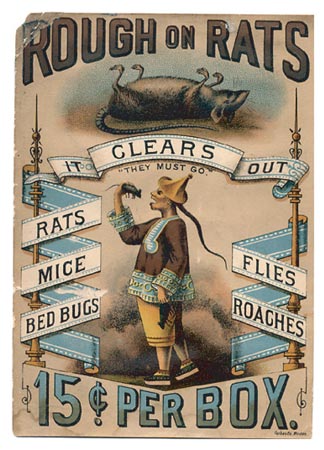
          Historically, the United States has not had the best relationship with Asian countries. For the most part, Americans have been racist and rude to the Asians in America and to the Asians residing in their homelands from the late nineteenth century well into the 20th century. After viewing the slate slideshow and observing the image on the second slide, it can easily be seen that America portrays Asians in a negative light. In an advertisement for rat poison, there is a Chinese man holding a rat to his face on the verge of placing it in his mouth. There was a suspicion of the Chinese eating rats but the advertisement became even harsher by not just insulting their eating practices, but saying above the Chinese man’s head, “they all must go”. This infers that Chinese people are on the same level as rats, dirty and unhealthy, and that they need to get out in order to assure the safety of the citizens of America.
                            
               This advertisement is relevant to the time era because the Chinese Exclusion Act of 1882 was implemented years before this rat poison advertisement came out. There was a massive immigration from China to America in the late 19th century for economic opportunity, but America recognized that the Chinese were taking too many jobs and banned them from immigrating. It would explain some of the hostility that Americans would have towards Chinese, because their flock to the States must have affected many people in their attempts to find jobs and make a living. It would have instinctually made American citizens dislike the Chinese, because they were taking American jobs and leaving the people who were born and raised on American soil without homes. The Americans would associate the Chinese with rats in this advertisement, and they would be more inclined to purchase the product to have the nuisance of rats out of their homes.  Obviously this advertisement generalizes all Chinese by saying that they consume rats for meals, and this makes this advertisement racist. But by putting the Chinese in a negative light, it made the advertisement more effective because the American consumer could relate to having a dislike for the Chinese with having a dislike for rats, and would want both of them gone.


              I recognized how this piece of media relates to a modern-day ad that also displays Asians in a poor light. I discovered an advertisement where Jackie Chan is promoting clothes. In this ad Jackie Chan wanders in the room asking the two characters if they are ready to go to the party. He has a thick accent and it makes him seem less intelligent, along with the fact that he is going to a party with two stuffed animals. When they stand up and the dolls are both naked, one of them travels to get clothes. In the meantime, a character makes a remark about wax on wax off, a famous quote from the Karate Kid, a movie in which Jackie did not make an appearance. This instance makes a generalization that all Asians look similar and that is proven because the doll cannot tell the difference between the real actor in the Karate Kid and Jackie Chan. When the other doll returns from the store having bought a wrestling suit, Jackie immediately jumps into a fighting pose. This supports the stereotype that Asians are masters of the martial arts, and will be ready to use their skill at any time. The advertisement ends with Jackie leaving the room with one of the dolls hanging in a lantern.  This advertisement would have appealed to a general audience, because the entire ad wasn’t based off of the product it was selling. It would have appealed to children interested in fighting, because they would watch this clip and immediately associate Jackie Chan’s fighting skills with the clothes advertised. Jackie Chan came into the ad acting friendly and left with a grin on his face after he beat up one of the dolls. This sends off the message that Jackie Chan is mischievous and not a loyal person to his friends.

            This advertisement relates to the old rat poison advertisement because the Chinese are still not being shown in a very positive light. Although the ad doesn’t have Jackie eating a rat, it does have him speaking in a very strong accent and fighting off clearly unskilled martial artists. This gives off a bad reputation for the Chinese because it makes them look like they cannot speak proper English, that they are not loyal friends, and they use their martial arts skills to harm their peers. This ad has not changed the image of the Chinese too much in the last century, but the insults that the advertisements lay on the Chinese are nowhere near as harsh as they were one hundred years ago.

Friday, August 27, 2010

Creating Links

The University of Southern California beat UCLA in college rankings.

Practicing Post

                                     The yellow man flew to the moon and back in four minutes.